The extraction of Diarrhetic Shellfish Poisoning (DSP) toxins from cockles is a crucial step in the production of new batches of certified reference materials (CRMs). These materials are essential for ensuring the accuracy and reliability of analytical methods used worldwide in food safety and marine toxin research.
The process begins with homogenization of the cockle tissue to obtain a uniform sample matrix. This step guarantees that the subsequent extraction will be representative of the toxin content in the whole organism.
Next, solvent extraction is performed using organic solvents such as acetone or methanol, which are effective for extracting lipophilic toxins like okadaic acid (OA), dinophysistoxins (DTXs), and their esters. The resulting extract contains both target toxins and other co-extracted matrix components.
After extraction, the mixture is filtered to separate the liquid phase from the solid residues, facilitating downstream purification.
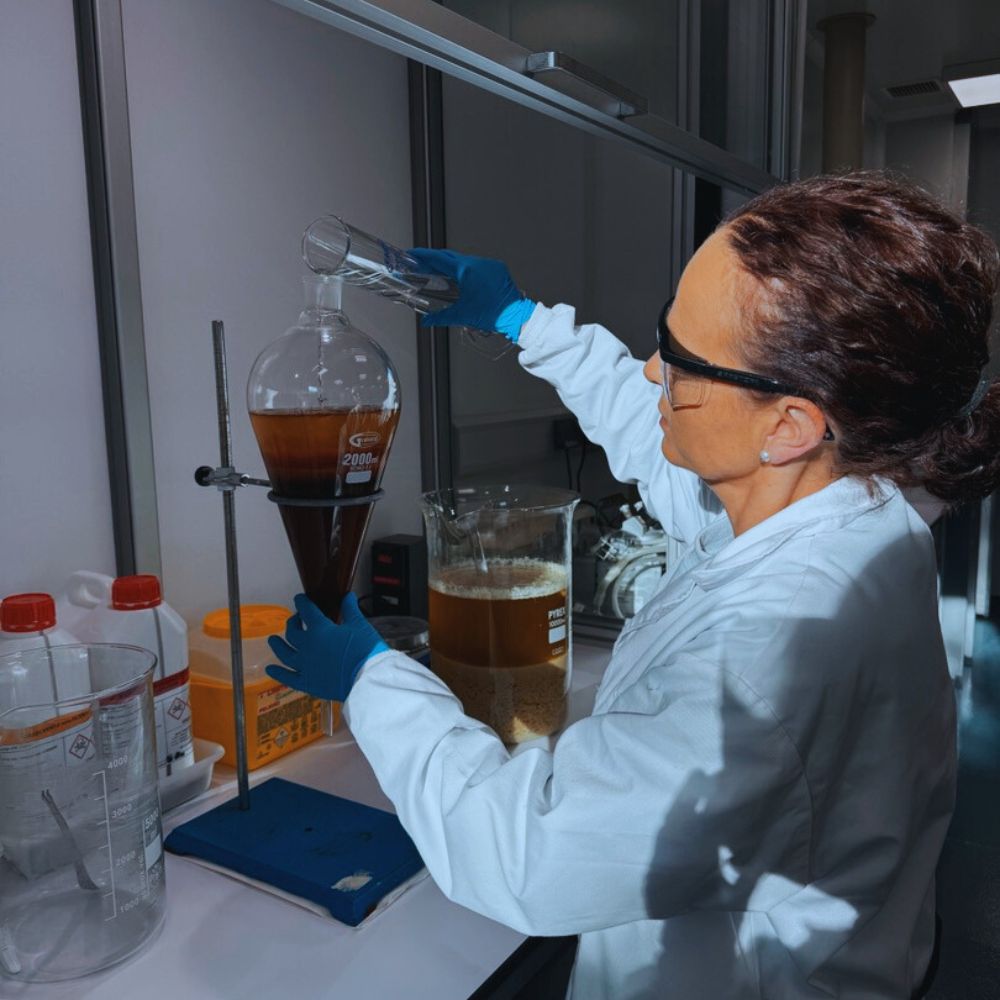
The purification stage is key to obtaining a clean extract suitable for quantitative analysis. It generally involves a liquid–liquid extraction (LLE), where toxins are selectively transferred between immiscible solvent phases based on their polarity and solubility. This allows the enrichment of the toxin-containing fraction while eliminating hydrophilic interferences. Following this, a solid-phase extraction (SPE) may be applied to further remove residual impurities and concentrate the analytes.
Finally, the purified extracts are analyzed by UPLC–MS/MS, a highly sensitive and selective technique that allows the identification and quantification of DSP toxins, including okadaic acid, DTX1, and DTX2. The data obtained are used to characterize and certify the new batch of reference material, ensuring full traceability and compliance with ISO 17034 standards.
At present, our team at Cifga is performing the liquid–liquid extraction stage of this process, an essential step toward the production of a new lot of DSP toxin certified reference material that will support laboratories and regulatory agencies in safeguarding food safety worldwide.